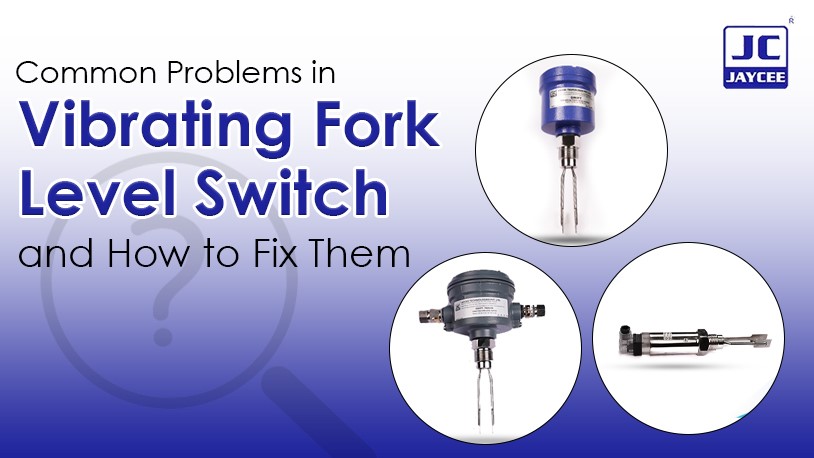
Common Problems in Vibrating Fork Level Switch and How to Fix Them
In the industrial process, level detection plays a crucial role in the successful and safe undertakings. Vibrating fork level switch is also a popular solution because of its reliability, simplicity, and low maintenance.
Nevertheless, as with any industrial device, it may experience problems unless it is installed or maintained properly. There is a knowledge of the common problems and solutions to prevent downtime and insures uniform performance.
What is a Vibrating Fork Level Switch?
A vibrating fork level switch is a point-level sensor, which detects the presence of a liquid by vibration of a tuning fork.
On contact with a liquid, the frequency of vibration of a fork changes, which sends a signal?
Why Problems Occur
Issues usually arise due to:
Harsh operating conditions
Improper installation
Lack of maintenance
Electrical faults
Identifying the root cause is key to fixing the problem quickly.
Common Problems and How to Fix Them
1. False Triggering
Problem:
The switch activates even when no liquid is present.
Causes:
Buildup on the fork
Foam or residue
Incorrect sensitivity settings
Solution:
✔️ Clean the fork regularly
✔️ Adjust sensitivity settings
✔️ Ensure proper installation position
2. No Response / No Output Signal
Problem:
The switch does not detect liquid.
Causes:
Power supply failure
Wiring issues
Sensor damage
Solution:
✔️ Check electrical connections
✔️ Verify power supply
✔️ Replace faulty components if needed
3. Delayed Response
Problem:
The switch reacts slowly to level changes.
Causes:
Heavy coating on fork
High viscosity liquids
Incorrect calibration
Solution:
✔️ Clean the sensor
✔️ Recalibrate the device
✔️ Use suitable model for viscous liquids
4. Continuous ON/OFF Switching
Problem:
Frequent switching even with stable levels.
Causes:
Turbulence in tank
Incorrect mounting location
Electrical noise
Solution:
✔️ Install in stable area
✔️ Use damping settings
✔️ Shield wiring from interference
5. Sensor Corrosion or Damage
Problem:
Sensor performance degrades over time.
Causes:
Exposure to aggressive chemicals
Poor material selection
Solution:
✔️ Choose corrosion-resistant materials (SS316)
✔️ Replace damaged sensor
✔️ Ensure compatibility with process fluid
6. Incorrect Installation
Problem:
Inaccurate readings or malfunction.
Causes:
Wrong mounting angle
Improper positioning
Installation in high turbulence zones
Solution:
✔️ Follow manufacturer guidelines
✔️ Install at correct level point
✔️ Avoid areas with heavy vibration
Best Practices to Prevent Problems
✔️ Regular cleaning and inspection
✔️ Proper installation
✔️ Use correct model for application
✔️ Routine calibration checks
✔️ Protect from extreme conditions
Maintenance Tips for Long-Term Performance
Clean fork periodically
Check wiring and connections
Monitor performance regularly
Replace worn-out parts
Follow preventive maintenance schedule
When to Replace the Level Switch
Consider replacement if:
Frequent failures occur
Sensor is physically damaged
Calibration is no longer stable
Performance is inconsistent
Latest Trends in Level Switch Technology
Smart Level Sensors: Real-time monitoring with digital output.
Energy-Efficient Designs: Lower power consumption.
Why Choosing the Right Product Matters
Selecting the right vibrating fork level switch ensures:
Accurate level detection
Reduced downtime
Longer service life
Better process control
Conclusion
Although vibrating fork level switch is a good and effective tool, it should be installed and well maintained to prevent issues that are common. With the knowledge of such problems and implementation of proper solutions, industries can achieve a smooth running and proper level measurement.
Monitoring and preventive maintenance are also possible to enhance the performance and increase the life of the device substantially.
FAQ
Due to buildup, foam, or incorrect sensitivity settings.
Check power supply, wiring, and sensor condition.
Yes, it is designed for harsh and contaminated environments.