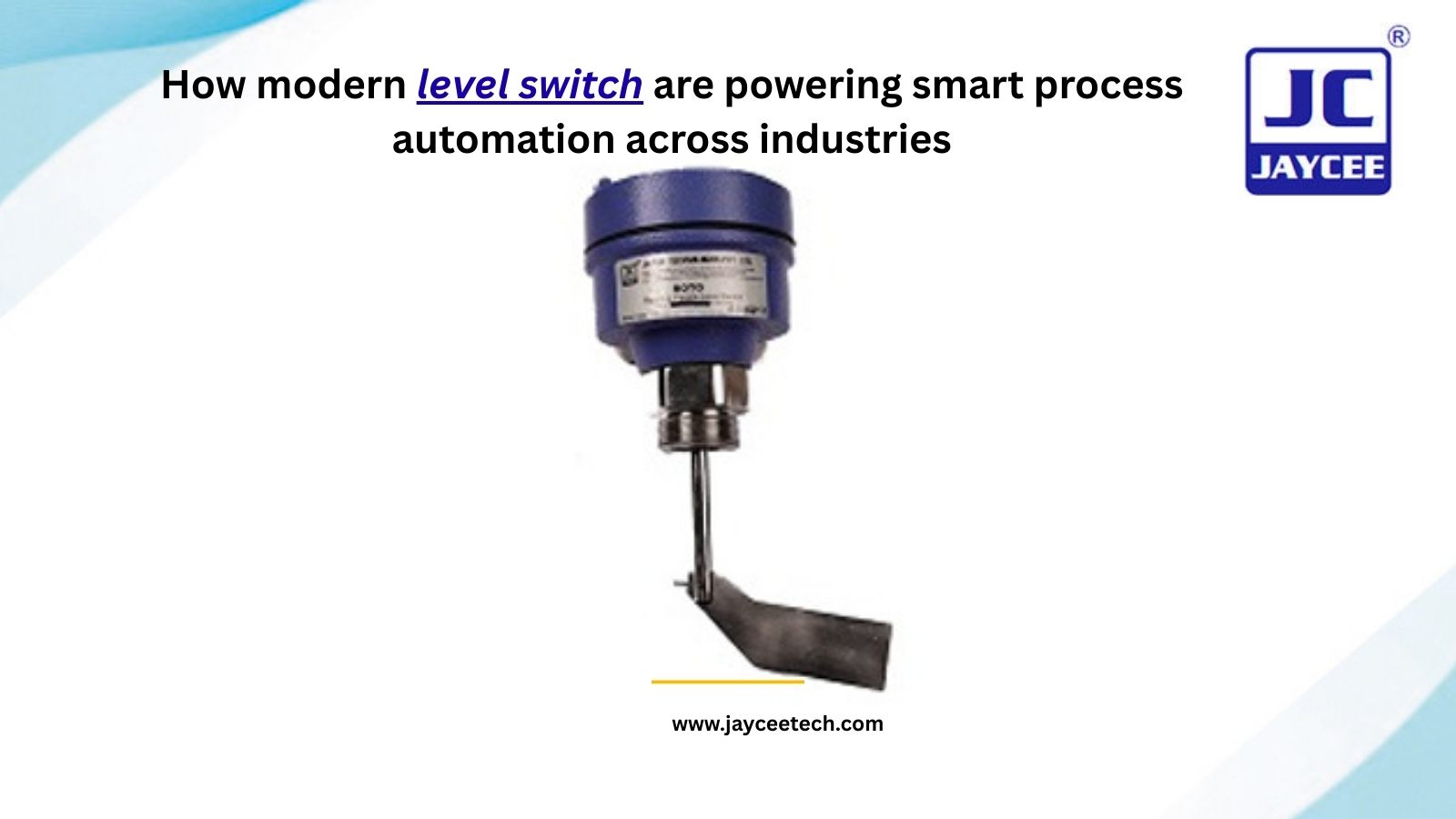
In today’s fast-evolving industrial environment, precision, automation, and real-time data have become essential for achieving high productivity and operational excellence. Whether it is a chemical plant, a food processing unit, a pharmaceutical setup, or a water treatment facility—industries worldwide are shifting towards smart automation systems. Among the many instruments enabling this transformation, modern Level Switch play a crucial role.
Level switches are no longer just basic on/off controls. With advanced sensing technologies, digital communication, self-diagnostics, and IoT compatibility, they have become key enablers of automated, safe, and efficient industrial processes. They help manufacturers achieve better control, reliability, and insights into material levels inside tanks, silos, hoppers, and pipelines.
In this blog, we explore how modern Level Switches are powering smart process automation across industries, and why they have become an integral component in smarter factories.
Industries today aim to reduce manual intervention, improve accuracy, cut operational costs, and enhance system reliability. Smart automation serves these goals by integrating:
Modern level switches support this shift by providing reliable, on-demand information about liquid, powder, and slurry levels. This enables optimized material flow, prevents downtime, and ensures safety during operations.
Modern level switches use sophisticated sensing principles that deliver high accuracy even in harsh conditions. Some of the widely used sensing technologies include:
Unlike older float-based switches, modern sensors offer:
This accuracy is crucial for industries where even small errors can lead to production issues or safety risks.
One of the biggest advantages of modern level switches is their real-time response capability. They instantly detect:
Real-time feedback allows automation systems to take immediate action such as:
This ensures smooth operations without manual supervision.
Safety is a top priority in industries dealing with chemicals, fuels, solvents, or hazardous materials. Modern level switches significantly improve safety by preventing:
Many advanced switches come with fail-safe circuitry and self-diagnostic features that alert operators when a fault occurs. This is extremely useful in hazardous areas where timely action is critical.
Industry 4.0 is built on smart machines, connectivity, and data-driven insights. Modern level switches support this by offering:
Through IoT dashboards, operators can see:
This empowers industries to make decisions faster and more accurately.
In industries where materials are sticky, viscous, dusty, or corrosive, traditional level switches often fail. Modern level switches are designed to withstand:
Their rugged design and advanced electronics make them suitable for continuous, 24/7 industrial operations.
Unplanned downtime can cost industries thousands—or even millions—depending on the scale. Modern level switches help minimize downtime by offering:
By preventing overflows, blockages, and pump failures, these switches significantly cut operational costs.
Level switches are used in nearly every industry because accurate level monitoring is essential for material handling, storage, and processing. Some major industries using modern level switches include:
Whether it's monitoring chemical tanks, controlling water levels, or managing hopper filling—level switches support a wide range of automation needs.
Predictive maintenance is transforming industrial reliability. Modern level switches with self-health monitoring features can detect:
This helps maintenance teams act before failure occurs, ensuring uninterrupted operations.
Modern Level Switches are much more than simple detection devices. They are intelligent automation tools that enhance efficiency, safety, reliability, and data-driven decision-making across industries. As industries move toward smarter, interconnected, and fully automated operations, these advanced level switches will continue to play a critical role in shaping the future of industrial automation.
With their precision, versatility, and compatibility with Industry 4.0 technologies, modern level switches are helping manufacturers achieve higher productivity and long-term operational excellence.
A Level Switch is a sensing device used to detect the presence or absence of liquid, slurry, or solid material in tanks, vessels, or pipelines. It is crucial for automation because it ensures safe, accurate, and timely level monitoring, preventing overflow, dry run, equipment damage, and process failures.
Modern Level Switches use advanced sensing technologies and digital outputs to provide real-time data to PLCs, SCADA, and DCS systems. This integration helps industries achieve predictive maintenance, energy optimization, and continuous monitoring with minimal manual intervention.
Industries such as water treatment, chemical processing, food & beverage, pharmaceuticals, oil & gas, power plants, and manufacturing benefit significantly. These industries require reliable level control to maintain safety, quality, and process efficiency.
They offer high accuracy, robust build quality, minimal maintenance, compatibility with automation systems, improved safety compliance, reduced process downtime, and long operational life.
Yes. Most modern Level Switches come with industry-standard outputs (such as PNP/NPN, relay, 4–20 mA, or digital communication), making them easy to integrate with existing PLCs, SCADA, and control systems without major modifications.
They provide early warnings for abnormal level conditions, helping prevent tank overflow, pump dry running, contamination, fire hazards, and structural damage. This ensures operational safety and compliance with industrial standards.
Key factors include type of media (liquid/solid), temperature, pressure, tank size, mounting configuration, required accuracy, material compatibility, and the nature of process automation required.
