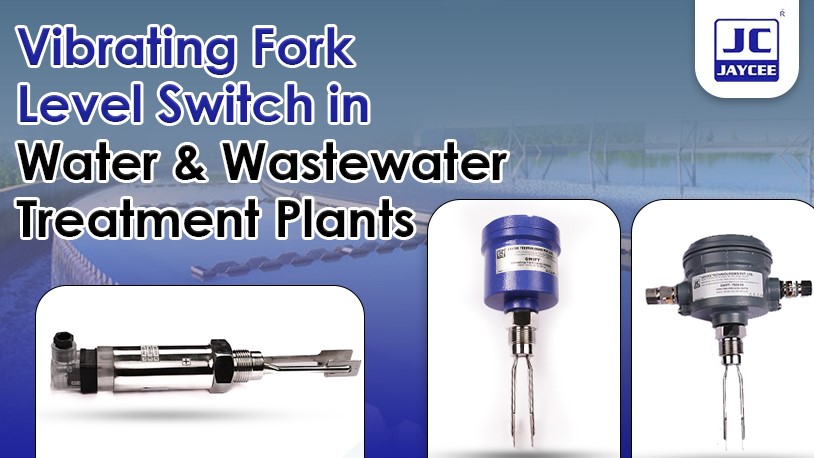
Effective and efficient operations in water and wastewater treatment plants demand proper monitoring of the level. Since storage tanks to sludge handling systems, it is important to keep the liquid at the correct level to prevent overflow, dry running or failure of the process.
Vibrating fork level switch is one of the most dependable solutions that are deployed in these plants. It is very precise, durable and low-maintenance, and it is used to automate processes in the modern world.
A point level detector is a vibrating fork level switch that is applied to sense when there is a presence or absence of liquids.
It operates on the principle of a vibrating fork (tuning fork) which alters the frequency as it is inserted into contact with a liquid.
The operation is simple and highly effective:
This ensures accurate level detection even in challenging conditions
Water treatment environments often include:
Vibrating fork level switches are preferred because they are:
A trusted manufacturer ensures:
Vibrating fork level switch is a very effective and reliable product that can be used in detecting levels in water and wastewater treatment plants. Its capability to work under extreme conditions with minimal maintenance makes it a critical part of the contemporary process industries.
The selection of the appropriate level switch assists in enhancing the efficiency, safety and reliability of the operation of the plant.
It is used to detect liquid levels in tanks and process systems.
Because it works reliably in dirty, viscous, and turbulent conditions.
No, it is not affected by foam or bubbles.
Yes, it requires minimal maintenance.
